

10 Stories for 10 Years: How ABLE accounts are advancing financial independence at work
Voya Cares® celebrates 10th anniversary with story of Kayla and NDSS
For too long, people with disabilities have been excluded from financial conversations — especially in the workplace. The assumption that individuals with disabilities can’t earn, save or fully participate in the economy has limited opportunity, independence and financial confidence for millions of Americans.
At Voya Cares, we’re proud to be working to change that narrative.
As part of our 10 Stories for 10 Years anniversary series, this month’s story highlights the significant impact of ABLE accounts, and what’s possible when employers provide access to benefits that promote equity and financial wellness for people with disabilities.
What are ABLE accounts?
ABLE (Achieving a Better Life Experience) accounts are accounts designed to help individuals with disabilities cover many of the added costs that can come with daily life, including healthcare, housing and employment.
As Kandi Pickard, CEO of the National Down Syndrome Society (NDSS), explains:
“ABLE accounts are tax-advantaged savings accounts that are intended to help offset the often-significant financial challenges that can accompany living with a disability. ABLE accounts allow individuals with disabilities to gain competitive integrated employment and earn income while maintaining valuable public government benefits that are income based.”
As of Jan. 1, 2026, expanded eligibility for ABLE accounts now means millions more individuals with disabilities can save. For those who rely on means-tested government benefits like Supplemental Security Income (SSI), Medicaid and SNAP, ABLE accounts offer a unique advantage: They allow individuals to save and invest without losing eligibility, even with asset limits as low as $2,000.
In short, ABLE accounts make it possible for people with disabilities to work, earn and save without risking essential means-tested benefits like SSI or Medicaid.
Why ABLE accounts matter in the workplace
ABLE accounts do more than provide a savings tool: they help ensure people with disabilities are included in their own financial decision-making.
“Individuals with disabilities are so often left out of financial decision-making conversations,” says Colleen Hatcher, Chief of Staff at NDSS. “There’s an antiquated assumption that people with disabilities can’t work for money or participate in the economy like the rest of us. We know that’s not true.
"At NDSS, colleagues with Down syndrome are thriving as professionals and deserve the same opportunities to build financial independence as anyone else,” she adds.
That’s where collaboration matters.
“Working with a financial services organization that has a specific lens focused on the disability community has been enlightening and life-changing for so many families,” says Colleen.
When NDSS approached Voya with questions about using ABLE accounts as part of long-term financial planning for their employees, the response was immediate and personal.
“Voya was incredibly receptive,” Colleen shares. “They walked us through the process and even met one-on-one with my colleagues with Down syndrome to answer their questions directly.”
Life-changing impact, one story at a time
ABLE accounts can help provide financial flexibility.
Colleen describes how colleagues with disabilities are now able to save for the future while living independently:
“Through ABLE accounts, my colleagues are able to save without jeopardizing SSI or Medicaid. That’s life changing.”
She shares the story of Kayla, who lives independently in Syracuse, N.Y.:
“Kayla puts her paycheck into her ABLE account. She uses it to go to the movies, buy Dunkin’ Donuts coffee — things she loves. She’s able to live her life independently, using the paycheck she works hard for, just like anyone else.”
Kayla herself puts it simply:
“I use my ABLE account for dental bills and rent. Because of my ABLE account, I’ve been able to have permanent teeth and pay for my apartment expenses. My ABLE account has changed my life.”
But become informed of the limitations
Because ABLE accounts are tax-advantaged, there are some limitations to be aware of:
- Eligibility is limited to people whose disability began before age 46 and are either receiving SSI, Social Security Disability Insurance (SSDI) or can provide a disability certification.
- Contributions for an ABLE account may not exceed the annual ABLE contribution limit ($20,000 in 2026), unless the beneficiary is working and their employer is not making certain retirement plan contributions. If that is the case, the beneficiary may contribute an additional amount not to exceed $15, 560 annually for 2026 in the continental U.S.
- If an ABLE account exceeds the SSI threshold of $100,000, SSI benefits may be suspended.
- Funds must be used on “Qualified Disability Expenses” (QDE), which is defined as any expense related to the designated beneficiary's blindness or disability that helps maintain or improve health, independence, or quality of life. QDEs are not only limited to items directly related to a person’s disability but include expenses that assist the beneficiary in daily life. Using funds for non-qualified expenses results in income tax and a 10% penalty on earnings.
- If a beneficiary passes away, some states may file a claim for all or part of the remaining funds to reimburse Medicaid expenses paid from the time the account was opened.
Building a more inclusive financial future
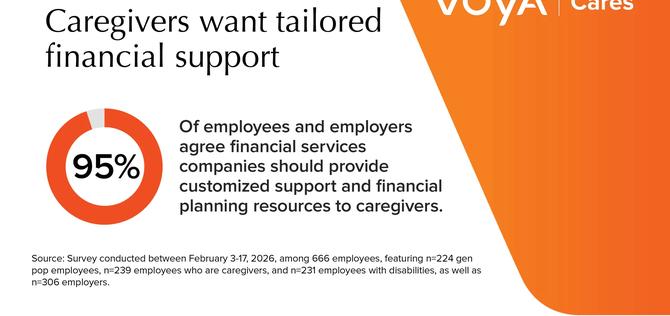
At Voya Cares, we believe financial wellness is not one-size-fits-all, and inclusion must be intentional.
ABLE accounts can provide a pathway to independence, equity and dignity for people with disabilities at work and beyond.
As we celebrate 10 years of Voya Cares, this story sets the tone for what’s possible when employers, advocates and financial institutions come together to build systems that work for everyone.
Learn more about ABLE accounts at VoyaCares.com/ABLE.
Discover why Voya Cares is a leader in financial inclusion at VoyaCares.com/10years.
Related Items


Kandi Pickard, Colleen Hatcher, and NDSS are not affiliated with the Voya® family of companies.
ABLE accounts (Achieving a Better Life Experience) are state-sponsored savings and investment programs, not products manufactured or sold directly by Voya Financial.
Neither Voya® nor its affiliated companies or representatives provide tax or legal advice. Please consult a tax adviser or attorney before making a tax-related investment/insurance decision.
Voya Cares® and other Voya products and services are offered through the Voya family of companies.