Nonqualified Deferred Compensation (NQDC) Plans
For example, a $500,000 earner relying on traditional sources may expect approximately:
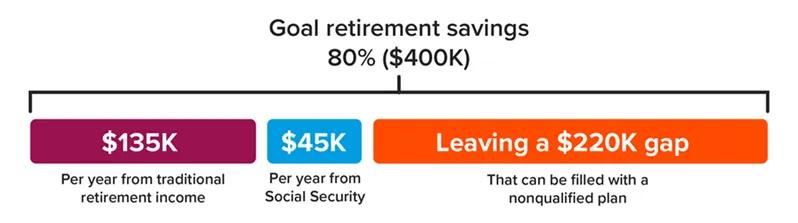
This means that conventional plans replace less than half the income a high earner needs in retirement.*
A nonqualified deferred compensation plan is designed to address this shortfall.
Nonqualified deferred compensation (NQDC) plans are a key strategy that employers use to help high-income employees bridge the retirement income gap created when traditional retirement plans and Social Security fall short.
Talk to a specialist
- Call: 866-481-3653 (option 4)
- Email: RetirementSales@Voya.com
Existing Voya plan sponsors:
- Call: 800-654-8065 (option 5)
How nonqualified deferred compensation plans work
Employees elect to defer a portion of their compensation — salary, bonus, or other earnings — into the plan before taxes are assessed. Any earnings on the deferrals grow on a tax-deferred basis and are distributed at a future date chosen by the employee — typically at retirement or separation from service. At distribution, benefits are taxed as ordinary income.
Because NQDC plans are not subject to ERISA qualification rules, employers have wide flexibility in plan design, including who is eligible, how benefits vest and when distributions occur.
Key benefits of nonqualified plans
Talk to a nonqualified plan specialist
If your organization is evaluating whether a nonqualified deferred compensation plan is the right fit, our team can help you assess plan design options, funding strategies and implementation.

Prospective plan sponsors and financial professionals
Exploring executive benefit solutions?
- Call: 866-481-3653 (option 4)
- Email: RetirementSales@Voya.com

Current plan sponsors
Already working with Voya?
- Call: 800-654-8065 (option 5)
Frequently Asked Questions (FAQs) for nonqualified plans
What’s the difference between a qualified and nonqualified plan?
How do employers fund nonqualified plans?
How are nonqualified plans taxed?
Why might an employer use life insurance to fund a nonqualified plan?
When should a company offer a nonqualified deferred compensation plan?
Who is eligible for nonqualified deferred compensation plans?
What are the risks of nonqualified deferred compensation plans?
*Hypothetical projection not intended to represent any specific individual. Not tax or legal advice. Consult a tax advisor.
The information presented here is for educational purposes only, and not intended to be legal or tax advice. Each plan must consider the appropriateness of the investments and plan services offered to its participants. All investing involves risk, including the loss or principal. There is no guarantee an investment, investment strategy or managed portfolio will meet its stated objective.
Each plan has unique requirements and should consult its attorney or tax advisor for guidance on its specific situation. Voya strongly suggests speaking with tax and legal advisors before making changes to a plan.
Products and services offered through the Voya® family of companies.