


You are using an unsupported browser that may limit access to certain website applications. If you continue, you may not be able to access certain pages or process requests. Please use one of our recommended browsers to experience the website properly.
Maximize your Health Savings Account (HSA) before Tax Day
Take advantage of these money moves before the tax filing deadline
January 20, 2026
Do you have an HSA but aren’t sure how to make the most of it? It’s more than just a line item — it can be a lifeline for unexpected eligible medical costs, especially as health care costs rise with age.
And with the deadline to file taxes (April 15, 2026) just around the corner, now’s the perfect time to make confidence-boosting moves. If you are enrolled in an HSA-qualified high-deductible health plan (HDHP) and have an HSA, you have a chance to lower your taxable income and the potential to help build your savings for future health costs.
Did you know your HSA comes with a triple-tax advantage?
Your HSA isn’t just about saving; it’s designed to help you keep more of your money through these three tax benefits:
- HSA contributions made through pre-tax payroll deductions lower your taxable income automatically
- Any interest or investment earnings in your HSA grow tax-free
- Withdrawals for eligible expenses are also not taxed*
This powerful trifecta allows you to save on taxes while maximizing your ability to spend on qualified health care expenses today and into retirement, as long as you have funds in your account.
What can you do to maximize your HSA before Tax Day?
1. Make a last-minute contribution
If you still have room in your budget and haven’t already reached last year’s maximum contribution limit, you can still make a contribution by April 15. Even a small amount may help lower your taxable income for 2025 and boost your savings potential. Remember, you can save all year long as well to maximize your HSA.
2. Complete a wellness activity if the option is available to you
If your employer offers incentive programs, you might be able to earn HSA dollars just by taking care of yourself. Think walking challenges, health screenings or other simple activities. These routine tasks can help get you closer to reaching your HSA contribution limit and are intended to help keep you aware of your health. Be sure to check with your employer to see what options may be available.
3. Invest unused funds
If your employer offers the option to invest within your HSA, it could potentially make a difference in your account balance. Typically, your balance needs to reach a designated threshold before you are able to invest. Here’s a hypothetical example of how much of a difference it could potentially make if you invested an annual contribution of $4,400 versus saving it over 30 years.
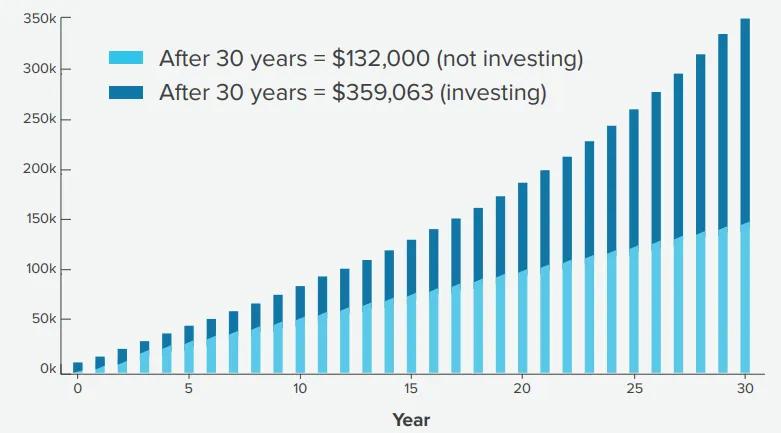
For illustrative purposes only. Assumptions: 30-year investment timeframe; annual contributions of $4,400; 6% annual return on investment; Interest compounded annually; 0% return on cash; no withdrawals. This hypothetical example does not represent the performance of any particular investment and is not a guarantee of future results. The illustration does not consider investment fees or expenses that would lower performance. Actual rates of return will fluctuate. All investing involves risks of fluctuating prices and the uncertainties of return and yield inherent in investing. All security transactions involve substantial risk of loss. Based on the Voya Savings Calculator.
How much can you contribute?
The IRS adjusts the maximum amount you can contribute to your HSA each year for inflation. You can still make contributions for the 2025 tax year until April 15, 2026. Knowing these limits can help you maximize contributions before filing.
For 2025, the limits were:
- $4,300 for individuals with self-only HDHP coverage
- $8,550 for individuals with family HDHP coverage
If you were age 55 or older by the end of 2025, you are eligible to contribute an added $1,000 as a catch-up contribution before this year’s tax filing deadline.
Looking ahead, here are the limits for the 2026 tax year:
- $4,400 for individuals with self-only HDHP coverage
- $8,750 for individuals with family HDHP coverage
The $1,000 catch-up contribution for those 55 and older remains the same for 2026.
Did you know?
- Balances are never forfeited and can be used at any point in the future if you have funds.
- Your account stays with you through job changes and into retirement.
- You can change your pre-tax payroll deduction as often as your employer allows.
- You can deposit money into your HSA with an online bank account transfer, personal check or payroll deduction (reducing taxable income is only available via payroll deductions).
- You can open and fund your HSA the first of the month after you meet eligibility requirements.
- You can pay yourself back from your HSA anytime, even years later. Just hang on to those receipts and let your balance grow in the meantime. However, note that you cannot reimburse yourself for HSA expenses incurred prior to your HSA establishment date.
- You may also invest your funds once your balance reaches a designated threshold. Check with your employer on what your options are.
When you understand your benefits and engage with your tools and resources, you’re managing your money while also investing in your future. And when you save in your HSA, you’re not only preparing for eligible medical expenses today — you are also planning for tomorrow.
Ready to take action?
Log in to your account and explore ways to boost your HSA before Tax Day.



*Non-qualified HSA withdrawals are subject to ordinary income tax on the amount withdrawn, and those under age 65 are subject to 20% additional tax on the amount withdrawn.
This material is provided by Voya for general and educational purposes only; it is not intended to provide legal, tax, or investment advice. All investments are subject to risk. Please consult an independent tax, legal, or financial professional for specific advice about your individual situation.
Health Savings Accounts offered by Voya Benefits Company, LLC (in New York, doing business as Voya BC, LLC). Custodial services provided by Voya Institutional Trust Company.
This highlights some of the benefits of a Health Savings Account. If there is a discrepancy between this material and the plan documents, the plan documents will govern. Subject to any applicable agreements, Voya and its subcontractors reserve the right to amend or modify the services at any time.
The amount saved in taxes will vary depending on the amount set aside in the account, annual earnings, whether or not Social Security taxes are paid, the number of exemptions and deductions claimed, tax bracket and state and local tax regulations. Check with a tax advisor for information on whether your participation will affect tax savings. None of the information provided should be considered tax or legal advice.
Investments are not FDIC Insured, are not guaranteed by Voya Benefits Company, LLC (in New York, doing business as Voya BC, LLC), and may lose value. All investing involves risks of fluctuating prices and the uncertainties of return and yield inherent in investing. All security transactions involve substantial risk of loss.
Not FDIC/NCUA/NCUSIF Insured | Not a Deposit of a Bank/Credit Union | May Lose Value | Not Bank/Credit Union Guaranteed | Not Insured by Any Federal Government Agency
4991650_1025
CN4925443_1127